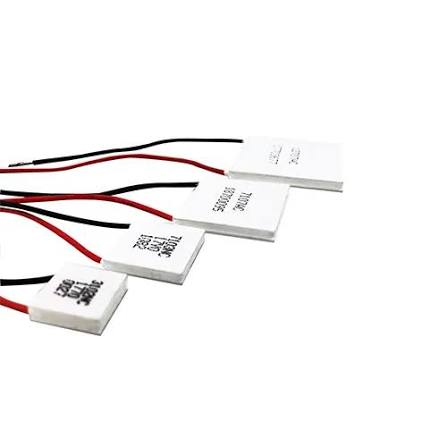
Modern electronic systems increasingly require accurate and reliable temperature management. From laboratory instruments and medical equipment to optical TEC Cooling Chip devices and telecommunications hardware, maintaining a stable temperature can directly affect performance, reliability, and operating life. A TEC Cooling Chip offers an efficient solution by providing precise thermoelectric temperature control in a compact solid-state design.
Unlike traditional cooling systems that rely on compressors, refrigerants, or moving mechanical components, thermoelectric cooling uses the Peltier effect to transfer heat from one side of a device to the other. This technology makes TEC solutions particularly useful where space, precision, low vibration, and dependable operation are important.
What Is a TEC Cooling Chip?
A TEC Cooling Chip is a thermoelectric component designed to create a temperature difference when electrical current passes through it. TEC stands for Thermoelectric Cooler, while the technology is commonly associated with the Peltier effect. A typical chip consists of semiconductor materials arranged between ceramic plates.
When direct current is applied, one surface becomes colder while the opposite surface becomes hotter. The cold side absorbs heat from the target component, and the hot side releases that heat into a heat sink or another thermal management system. Reversing the direction of the electrical current can reverse the heating and cooling effects.
This bidirectional capability makes thermoelectric technology useful for applications that require both cooling and heating rather than cooling alone.
How Thermoelectric Cooling Works
The operating principle behind a TEC Cooling Chip is based on the movement of electrical charge carriers through semiconductor materials. Inside the module, multiple semiconductor elements are connected electrically in series and thermally in parallel.
When current flows through these elements, heat is absorbed at one surface and transported toward the opposite surface. The result is a temperature gradient between the two sides.
The amount of cooling depends on several factors, including electrical current, voltage, thermal load, ambient temperature, and the efficiency of the heat dissipation system. Properly controlling these factors allows a TEC system to maintain a target temperature with considerable accuracy.
Because the process does not require mechanical movement, TEC devices can operate quietly and with very low vibration.
Key Advantages of TEC Cooling Chips
One of the biggest advantages of thermoelectric cooling is precise temperature control. A TEC Cooling Chip can be integrated with temperature sensors and electronic controllers to maintain a specific temperature range. This is especially valuable for equipment where even small temperature changes can influence performance.
Compact and Lightweight Design
TEC chips are generally small and lightweight compared with many conventional refrigeration systems. Their compact structure allows engineers to integrate temperature control into devices where available space is limited.
This makes them suitable for portable instruments, optical equipment, laboratory devices, and compact electronic systems.
No Moving Mechanical Parts
Traditional refrigeration systems often use compressors, motors, and other moving components. A thermoelectric cooler operates without these mechanical parts. This reduces mechanical vibration and can simplify system design.
The absence of moving parts can also support dependable operation in applications where continuous performance is required.
Heating and Cooling Capability
A major benefit of thermoelectric technology is its ability to provide both heating and cooling. By changing the polarity of the electrical current, the cold and hot sides can be switched.
This makes TEC technology useful for systems that need temperature cycling or stabilization across changing environmental conditions.
Accurate Thermal Management
With an appropriate controller and temperature sensor, thermoelectric systems can respond quickly to temperature changes. This allows them to maintain stable conditions for sensitive components.
Precise thermal management can be especially important in optical sensors, laser systems, scientific instruments, and electronic testing equipment.
Applications of TEC Cooling Technology
Thermoelectric cooling has become an important technology across many industries because of its flexibility and compact design.
Electronics and Semiconductor Equipment
Electronic components can experience performance changes when operating temperatures rise. TEC modules can provide localized cooling for sensitive processors, sensors, and semiconductor devices.
They can also be used in testing equipment where a component needs to be maintained at a controlled temperature during measurements.
Medical and Laboratory Equipment
Many laboratory instruments require stable thermal conditions for accurate operation. Thermoelectric devices can support temperature regulation in diagnostic equipment, sample-handling systems, analytical instruments, and other specialized devices.
Because TEC systems can provide controlled heating and cooling, they can also be used for temperature cycling in laboratory environments.
Laser and Optical Systems
Laser diodes and optical sensors can be sensitive to temperature variations. Changes in temperature may affect wavelength, output stability, or measurement accuracy.
A TEC Cooling Chip can help maintain the operating temperature of these components, supporting consistent optical performance.
Telecommunications
Optical communication equipment can require stable temperatures for lasers and other sensitive components. Thermoelectric cooling provides localized thermal management without requiring a large refrigeration system.
Its compact size makes it particularly useful for equipment where efficient use of space is important.
Consumer and Portable Devices
Thermoelectric technology can also be found in specialized portable cooling products and compact temperature-control equipment. Its small size and solid-state operation make it attractive for applications where traditional refrigeration would be impractical.
Factors to Consider When Selecting a TEC Chip
Choosing the right thermoelectric component requires more than simply comparing physical dimensions. Engineers need to evaluate the thermal load, required temperature difference, electrical specifications, and environmental conditions.
Cooling capacity is one of the most important factors. The selected device should be capable of handling the amount of heat generated by the target component while maintaining the desired temperature.
Maximum current and voltage should also match the available power supply and control system. Operating outside the recommended electrical specifications may reduce efficiency or damage the device.
The physical size of the TEC is another consideration. The module must fit properly within the intended assembly while providing sufficient thermal contact with the target surface.
Importance of Heat Dissipation
Although a TEC Cooling Chip moves heat away from its cold side, the heat eventually needs to be removed from the hot side. Effective heat dissipation is therefore essential for achieving good cooling performance.
Heat sinks, fans, liquid cooling systems, or other thermal management solutions may be used depending on the application. Poor hot-side cooling can increase the temperature of the entire system and reduce the achievable temperature difference.
Thermal interface materials can also improve contact between the TEC module and adjacent surfaces. Proper mechanical installation helps reduce thermal resistance and supports consistent performance.
Improving TEC System Efficiency
Efficiency depends on both the TEC module and the overall system design. Selecting a module that closely matches the required cooling load can help prevent unnecessary power consumption.
Temperature sensors and electronic controllers can further improve performance by adjusting current according to changing thermal conditions. Instead of operating continuously at maximum power, a controlled TEC system can provide only the cooling required to maintain the desired temperature.
Good insulation around the cooled area can also reduce unwanted heat transfer from the surrounding environment.
Future Potential of Thermoelectric Cooling
As electronic systems become smaller and more sophisticated, thermal management is becoming increasingly important. Thermoelectric technology offers an attractive approach because it combines compact construction, precise control, and solid-state reliability.
Continued improvements in semiconductor materials, module design, controllers, and thermal interfaces may further improve thermoelectric performance. These developments could expand the use of TEC systems in advanced electronics, scientific equipment, optical technology, and specialized industrial applications.
Conclusion
A TEC Cooling Chip provides a practical and flexible method for precise temperature control. Its solid-state construction, compact size, low vibration, and ability to provide both heating and cooling make it suitable for a wide range of applications.
From optical and laboratory equipment to electronics and telecommunications systems, thermoelectric cooling can help maintain stable operating conditions for temperature-sensitive components. However, achieving the best results requires careful selection of the TEC, effective heat dissipation, suitable temperature control, and proper thermal integration.
As the demand for compact and accurate thermal management continues to grow, thermoelectric cooling technology is positioned to remain an important solution for modern temperature-control applications.
About the Author